
How to Check for an Ellis County Warrant
Ellis County does not publish an online active-warrant list. The Sheriff's Office posts a jail roster that shows who is in custody after an arrest, but a custody roster is not a warrant search. A warrant can sit open for months before anyone is booked, so the roster will not tell you whether an order is out for a name. The reliable path is to go straight to the office that issues and holds warrants.
Three sources cover almost every Ellis County warrant. The Sheriff's Office serves arrest warrants and fugitive holds. The District Court Clerk issues bench warrants and failure-to-appear warrants tied to court cases. The Town of Arnett handles city ordinance and municipal citation matters. Most court-issued warrants also leave a trail on the statewide docket systems, which is the fastest way to confirm an order before you call.
Use a simple order when you check. Start with the free court docket, then call the office that issued the order.
- Search the Oklahoma State Courts Network docket at oscn.net, choose Ellis County District Court, and look for warrant entries, failure-to-appear notes, or bond forfeitures on the case.
- Check On Demand Court Records at odcr.com as a backup, selecting Oklahoma District Courts and the Ellis court, then searching by party name in Last, First format.
- Call the Ellis County Court Clerk at (580) 885-7255 to confirm a bench or failure-to-appear warrant and ask what the court needs to clear it.
- Call the Ellis County Sheriff's Office at (580) 885-7377 about an arrest warrant, a hold, or surrender and bond questions.
- For a city ticket or ordinance case, contact the Town of Arnett at (580) 885-7833, since those may not appear as District Court cases.
Types of Warrants in Ellis County
Not every warrant works the same way. Some follow a fresh criminal allegation. Others come from a judge after a missed court date or an unpaid balance. The type tells you which office to call and what it will take to resolve the order. The table below sorts the warrant types seen in Ellis County District Court and through the Sheriff's Office.
| Warrant Type | Who Issues It | Common Reason |
|---|---|---|
| Arrest warrant | Judge on a sworn affidavit | Probable cause that a person committed a crime. |
| Bench warrant | District Court judge | Failure to appear, failure to pay, probation violation, or contempt. |
| Search warrant | Judge or magistrate | Authorizes a search of a place, person, or property; often sealed during an active case. |
| Civil or body attachment | Court in a civil matter | Limited civil enforcement, such as a witness who ignores a court order. |
| Fugitive warrant or hold | Another county, state, or federal agency | A wanted person located in Ellis County on an outside charge. |
Search warrants carry an SW case prefix in the Oklahoma system and may not be public while an investigation is open. Bench warrants are the most common reason a routine traffic or misdemeanor case turns into an arrest order, because a single missed setting can prompt the judge to issue one.
Where to Check for Ellis County Warrants
Because there is no warrant portal, the phone and the front counter do the work. Two offices in Arnett handle the bulk of warrant questions. The Sheriff's Office covers arrest warrants, holds, surrender, and bond. The Court Clerk covers warrants attached to a District Court case number. Calling the right one first saves a trip across rural northwest Oklahoma.
Ellis County Sheriff's Office
Sheriff Shane Booth
210 Renfrow Ave
Arnett, OK 73832
Phone: (580) 885-7377
Ellis County Court Clerk
Sally Wayland
100 S Washington
Arnett, OK 73832
Phone: (580) 885-7255
Hours: Mon-Fri 8:30 a.m. to 4:30 p.m.
You can also file an Oklahoma Open Records Act request with the Sheriff's Office for warrant or booking information that is not posted online. Access is limited by 51 O.S. Section 24A.8, the law-enforcement records section, so basic arrest and booking facts are open while sealed warrants and active investigations may be withheld.
Note: A warrant tied to time in the county jail will also surface in the Ellis County inmate records once a person is booked.
Ellis County District Court Warrant Entries
Court-issued warrants leave a record on the case docket, and that docket is the closest thing Ellis County has to a warrant search. The Oklahoma State Courts Network is the official statewide system, and it includes Ellis County District Court under court code EL. On Demand Court Records lists Ellis in its court dropdown as a backup search and payment channel.
Warrant activity shows up inside a case, not as a standalone list. A docket may note a bench warrant issued, a failure to appear, a bond forfeiture, or a payment-plan warrant after a missed installment. Search warrants appear under the SW case type and may be limited while the matter is active. To pull a case, choose Ellis County District Court and enter a case number with its Oklahoma prefix and year, or run a party-name search through ODCR.
Common case prefixes help narrow a search. CF marks a felony, CM a misdemeanor, TR a traffic case, and SW a search warrant. The full charge file behind a felony or misdemeanor warrant lives in the Ellis County criminal court records, where the charges, pleas, and disposition are kept by the Court Clerk.
Municipal and City Warrants in Arnett
Not every warrant runs through the District Court. A city ordinance violation or a municipal traffic citation issued inside Arnett can lead to a city warrant that never appears as a state case. These orders are handled at the municipal level, so a clean OSCN search does not always mean the slate is clear.
The Town of Arnett contacts page lists the municipal office, its hours, and the local phone numbers that route city matters.
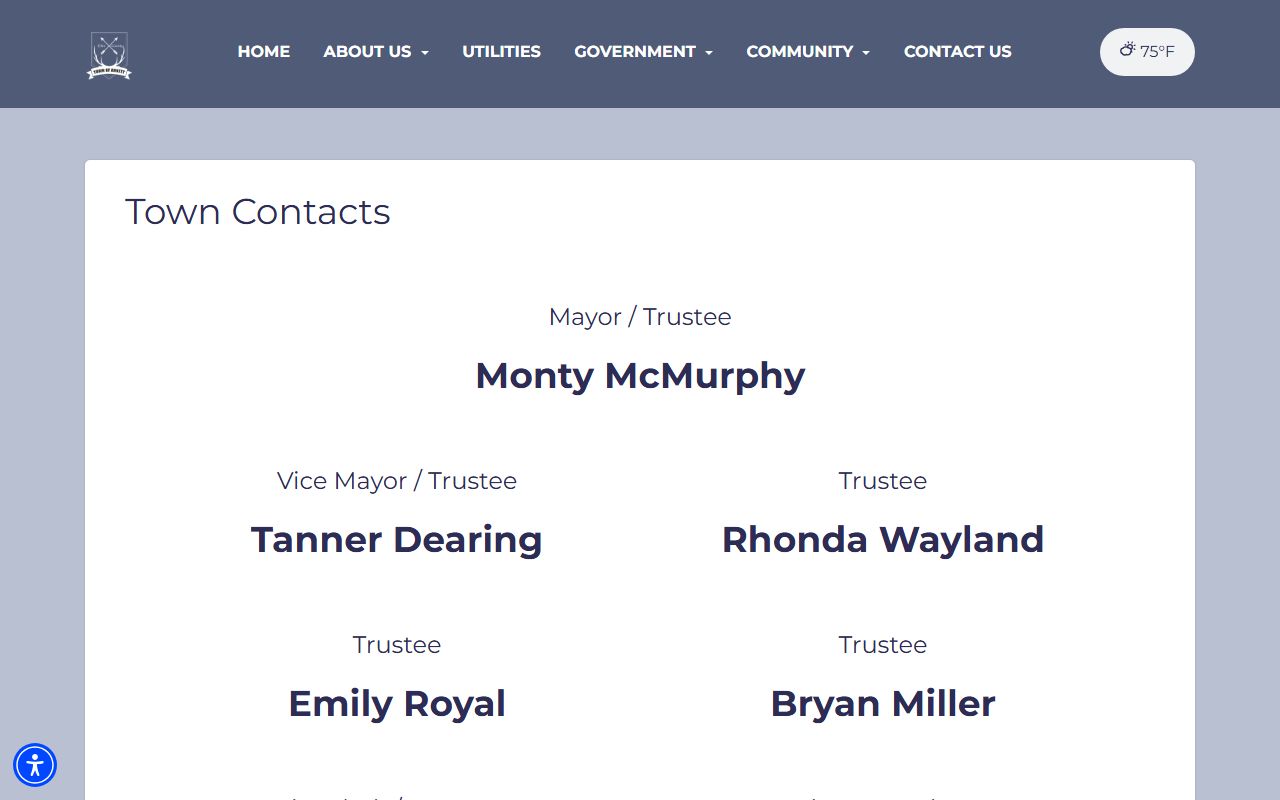
That municipal contact list matters for warrants because a city citation or ordinance case is paid and cleared through the town, not the Court Clerk. If a ticket looks city-issued, call the Town of Arnett at (580) 885-7833 to confirm whether a municipal warrant or a court date is involved before assuming the District Court holds the record.
What an Ellis County Warrant Record Shows
When a warrant record is public, it carries a set of standard fields. Some appear only after the warrant is served, such as the arresting agency and the served date. The inventory below lists the fields you can expect to see on a public Ellis County warrant, whether you read it on the court docket or hear it from the issuing office.
| Field | What It Shows |
|---|---|
| Name | The person the warrant names. |
| Case Number | The Oklahoma prefix-year-number tied to the underlying case. |
| Warrant Type | Arrest, bench, search, civil attachment, or fugitive hold. |
| Issuing Court | Ellis County District Court or the municipal court. |
| Charge or Reason | The offense, failure to appear, or failure to pay behind the order. |
| Bond Amount and Type | The bond set for release, if any. |
| Issue Date | The date the judge signed the warrant. |
| Status or Served Date | Whether the warrant is open, served, returned, or recalled. |
| Arresting Agency | The agency that executed the warrant, shown once served. |
The docket entry behind a warrant is often shorter than the full field set above, because some details live in the court file rather than the public summary. For a certified copy of a warrant or the paperwork supporting it, the Court Clerk is the source, not a screenshot of the online docket.
State and Federal Warrants
Some orders reach beyond the county. The Oklahoma Department of Corrections runs a statewide system that flags fugitives and sentenced offenders, which is useful when a person may be wanted on a state hold rather than a local charge. Federal warrants do not appear in any county or state court system at all.
Check the OK Offender Lookup for state-level fugitive and offender information after accepting the system's terms. For a federal warrant, the record is held by federal law enforcement and the federal courts, not the Ellis County District Court or the Sheriff. A county roster or docket search will not surface a sealed federal order.
What to Do If You Have an Outstanding Warrant
An open warrant does not go away on its own, and a routine traffic stop can turn into an arrest once it is found. The safer path is to learn the details and deal with the issuing office directly. Do not rely on a third-party warrant website to tell you the order is gone, because those sites lag and do not clear anything.
- Confirm the warrant through the Oklahoma court docket and the issuing office before you act.
- Call the Ellis County Court Clerk at (580) 885-7255 for a bench or failure-to-appear warrant, and ask whether a court date, a payment, a bond, or an attorney appearance is required.
- Call the Ellis County Sheriff's Office at (580) 885-7377 about surrender, jail intake, a hold, or bond on an arrest warrant.
- If the warrant is municipal, contact the Town of Arnett or the city court that issued the citation.
- If a bond is set, confirm the accepted payment or bondsman procedure with the jail or court.
- After you resolve the matter, verify that the docket shows the warrant quashed, recalled, or satisfied, since the systems can lag.
Important: Talk to a lawyer before you surrender on any warrant, since counsel can arrange the appearance, address bond, and protect your rights at the first hearing.
Restricted Ellis County Warrant Records
Not every warrant is open to the public. Oklahoma law and court rules keep certain orders out of view. Search warrants tied to an active investigation are frequently sealed until the case is filed or the search is executed and returned. Juvenile matters are confidential under Title 10A, so a juvenile warrant will not read like an adult docket entry.
Law-enforcement record access falls under 51 O.S. Section 24A.8, which opens basic arrest and booking facts while allowing agencies to withhold investigative material. Federal warrants stay in the federal system. When a warrant or its supporting paperwork is sealed, the Sheriff and the Court Clerk can decline to release it, and the right move is to ask the issuing office what is available and what requires a court order to view.